Selling HVAC Systems to Millennials: Why Online Pricing Is No Longer Optional
_1784817635108.png) Bill Brown
Bill BrownMillennials are the largest generation of home buyers for the 12th consecutive year, representing 38% of all buyers as of 2024 — and 84% of them research purchases online before calling anyone. (National Association of Realtors, 2024) HVAC contractors who refuse to publish even ballpark pricing are invisible to the largest buyer segment in the market. Contractors who publish price ranges and use online configurators capture research-stage buyers before a competitor's phone number even appears.
For the past 20 years, most residential HVAC replacements have been purchased by Baby Boomers and Gen X homeowners. These generations bought HVAC systems long before online research became the norm, so traditional "call for price" or "schedule an estimate first" sales processes worked effectively.
But the next decade will not look like the last one.
Millennials — born 1981 to 1996 — are now the largest adult generation in the U.S. and the largest single generation of home buyers for the 12th consecutive year, representing 38% of all home purchases in 2024 according to the National Association of Realtors 2024 Profile of Home Buyers and Sellers. Although their homeownership rate initially lagged behind Boomers, it has climbed steadily — and the systems installed when those homes were purchased are reaching the end of their useful life. The replacement cycle for HVAC equipment runs 15–20 years, which means the equipment Boomers installed is now Millennial property.
This article explains why offering transparent online pricing—at least in the form of credible price ranges—is becoming mandatory if you want to win the Millennial homeowner.
1. Millennials Expect Accessible Online Information, Not Phone-Call Gatekeeping
The shift in buyer expectations is measurable.
Fact:
A 2023 Statista survey reported that 84% of U.S. consumers research products online before making a purchase, even for high-ticket categories like home improvement and automobiles.
Fact:
A report by Salesforce found that Millennials are significantly more likely than older generations to prefer digital self-service during the buying process, including online research and price discovery.
If a potential customer has spent their entire adult life purchasing goods via the Internet, a "Call for Price" tab creates friction. The immediate reaction is often, "I'm not going to call you."
This is not theory; it is demonstrated behavior in every major consumer category. When a younger homeowner lands on a contractor's website and cannot find even a ballpark price range, the emotional response is frustration, not curiosity. Frustrated buyers do not pick up the phone; they simply click the back button.
2. Google and AI Results Reward Contractors Who Give People What They Want
Future buyers will not sift through a mountain of blue links to find a phone number. They want direct answers. Today, Google's search algorithm—and increasingly, AI-driven search tools—heavily favors pages that provide:
- Clear answers
- Transparent information
- Pricing guidance
- High-intent user experiences
This reward system is not going away.
Fact:
Google confirms in its Search Quality Evaluator Guidelines that websites demonstrating high "E-E-A-T" (Experience, Expertise, Authoritativeness, Trustworthiness) are favored in search rankings. Pricing transparency is directly tied to "trustworthiness" in these guidelines.
When your website refuses to answer the very question customers most want answered — "How much does it cost?" — Google has little incentive to rank you. It is about earning the recommendation of both Google and the new wave of AI search assistants.
3. The "Call for Price" Model Will Quietly Shrink Your Market Share
If you believe that younger buyers will tolerate hidden pricing, you risk losing market share to competitors who adapt faster.
To maintain visibility, your content must address the five topics buyers inevitably research before spending money:
- Cost: How much is this going to set me back?
- Problems: What could go wrong?
- Comparisons: How does Brand A compare to Brand B?
- Reviews: What do others think?
- Best in Class: What is the top-rated option?
Every industry that embraces these five topics online gains trust and market exposure. The industries that avoid them lose visibility. Companies in similar high-ticket verticals (like swimming pools or roofing) that have published detailed pricing guides have historically seen massive increases in revenue because they capture early-stage research traffic that competitors ignore.
4. The Real Race to the Bottom Is Invisible
A common objection HVAC companies raise is: "If I post pricing online, won't it turn into a race to the bottom?"
The reality is that "the bottom" is not low pricing. The bottom is:
- Not getting the click.
- Not getting the phone call.
- Not getting the booking.
- Not even knowing the customer existed.
Low pricing is not the enemy; invisibility is. If Millennials never see your estimate page because you hide pricing, you lose the sale before the race even begins.
5. Your Website Must Become a Transparent Digital Sales Experience
To build a trusted brand in the digital age, you must adopt two key principles:
Address what others ignore:
Most contractors do not talk directly about cost, problems, comparisons, or alternatives. The ones who do become trusted authorities.
Sell the way buyers want to buy:
The trend is clear—buyers want to self-educate, maintain control, and make progress online without a salesperson hovering over them.
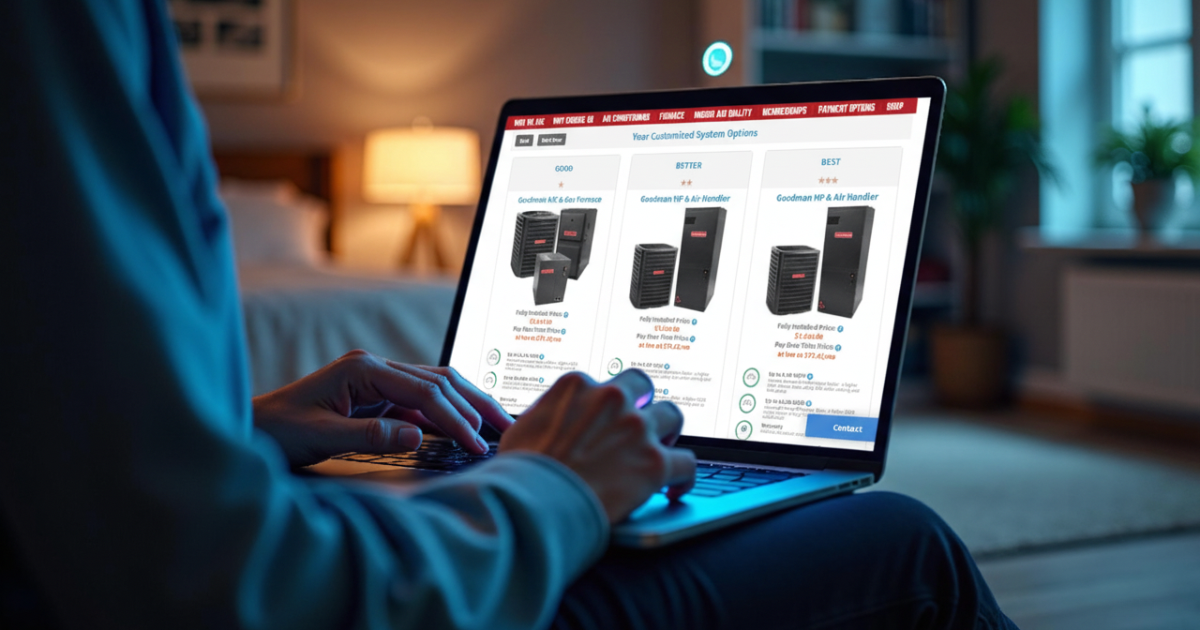
What this means for HVAC companies: You must consider adding tools that facilitate this self-service journey:
- Online pricing ranges
- System-level configurators
- "Which system is right for me?" quizzes
- Instant estimate tools
- Self-schedulers
These tools increase trust and dramatically improve lead volume. Platforms like Contractor Commerce enable HVAC contractors to offer instant online pricing for system replacements, allowing homeowners to configure and price their system without requiring a phone call.
Fact:
Salesforce reports that 66% of customers prefer brands that offer self-service tools, and this preference is even stronger among Millennials.
6. The Anatomy of a High-Converting Pricing Page
You already explain pricing dynamics in the home every day. The most successful contractors are now mirroring that real-world expertise online.
A complete, high-converting pricing page should include:
- Factors that increase price: (e.g., ductwork modifications, high-efficiency units).
- Factors that decrease price: (e.g., rebates, tax credits, standard efficiency).
- Why rates vary: Explain why you might charge more than the "truck and a ladder" guy.
- Ballpark ranges: Where your pricing generally falls.
- Package explanations: Good, Better, Best.
- Upgrades and add-ons: Thermostats, zoning, air purifiers.
- Hidden or unexpected costs: Be transparent about permit fees or electrical upgrades.
- Financing options: Show monthly payments, not just total cost.
This approach guides homeowners through the full decision-making process digitally, filtering out low-quality leads and warming up serious buyers.
7. Online Pricing Will Become Universal. Early Adopters Win.
Within five years, it is highly likely that the majority of your competitors will have a pricing estimator on their site. This trajectory has played out in dozens of other industries:
- Boating: Went from zero to 70% adoption of online "Build & Price" tools.
- Automotive: Universal adoption of online configurators.
- Solar & Roofing: Rapidly moving toward instant online quotes.
The HVAC industry will follow. The only question is who secures the early-adopter advantage. Forward-thinking contractors are already deploying online pricing systems that let homeowners configure, compare, and price HVAC systems on their own terms—building trust before the first phone call ever happens.
Conclusion: Millennials Aren't the Future Buyer — They're the Current Buyer
If you want to capture the next decade of HVAC system replacements:
- Build trust.
- Provide transparent information.
- Offer price ranges.
- Add self-service tools.
- Remove friction.
Millennial homeowners do not want sales pressure. They want clarity, control, and trust. The contractors who deliver that trust online will dominate the next era of residential HVAC.
Ready to Add Online Pricing to Your HVAC Business?
Learn how Contractor Commerce enables HVAC contractors to offer transparent online pricing that builds trust with Millennial homeowners, increases lead volume, and gives you the early-adopter advantage.
Learn More About Online PricingCommon Questions
Why do Millennial homeowners expect to see HVAC pricing online before calling?
Millennials are the largest generation of home buyers and have spent their entire adult lives researching purchases online before contacting a seller. When they hit a 'Call for Price' page, the immediate reaction is often to move on. They interpret pricing transparency as a signal of confidence and trustworthiness — a contractor willing to publish ballpark numbers is one who believes their price is fair.
Should HVAC contractors post prices on their website?
At minimum, contractors should post price ranges and factors that affect cost. Full transparency is not required — but refusing to publish any pricing creates friction for the largest buyer segment in the market. Millennial homeowners will search until they find a competitor who gives them something to anchor on. Being the contractor who answers that question first builds trust before the first phone call.
Won't posting HVAC prices online cause a race to the bottom?
The race to the bottom is not about low pricing — it is about invisibility. If Millennial homeowners never find your site because you hide all pricing, you lose the sale before the race even starts. Publishing price ranges alongside factors that explain why quality work costs more — warranty, proper sizing, permit compliance — positions you as the trustworthy expert, not the cheapest option.
What should a high-converting HVAC pricing page include?
Cover the factors that increase price (ductwork modifications, high-efficiency equipment, difficult access), factors that decrease price (rebates, standard efficiency, straightforward installs), why rates vary between contractors, ballpark ranges for common system types, Good-Better-Best package breakdowns, financing options shown as monthly payments, and any unexpected costs like permits or electrical upgrades. This mirrors the conversation you already have in the home — but it happens online, before anyone calls.
What self-service tools should I add to my HVAC website to capture Millennial buyers?
The highest-impact tools are online pricing configurators (where homeowners can build and price a system themselves), 'Which system is right for me?' quizzes, instant estimate tools based on home size and equipment age, and self-schedulers. These tools let buyers make progress on their own timeline without requiring a phone call — which is exactly how Millennials prefer to research major purchases.
How long before online HVAC pricing becomes standard across the industry?
Most industry observers expect the majority of HVAC contractors to offer some form of online pricing within five years. The trajectory mirrors what happened in automotive, boating, solar, and roofing — industries where online configurators went from zero to near-universal adoption within a decade. The question is not whether it will happen in HVAC, but which contractors in your market capture the early-adopter advantage while competitors are still resisting.
External Sources
- Statista: "Online research before purchase among U.S. consumers." https://www.statista.com
- Salesforce: "State of the Connected Customer." https://www.salesforce.com
- Google: "Search Quality Evaluator Guidelines." https://developers.google.com/search